

10 Things Hiding in Your Sofa That You Can't See
Introduction
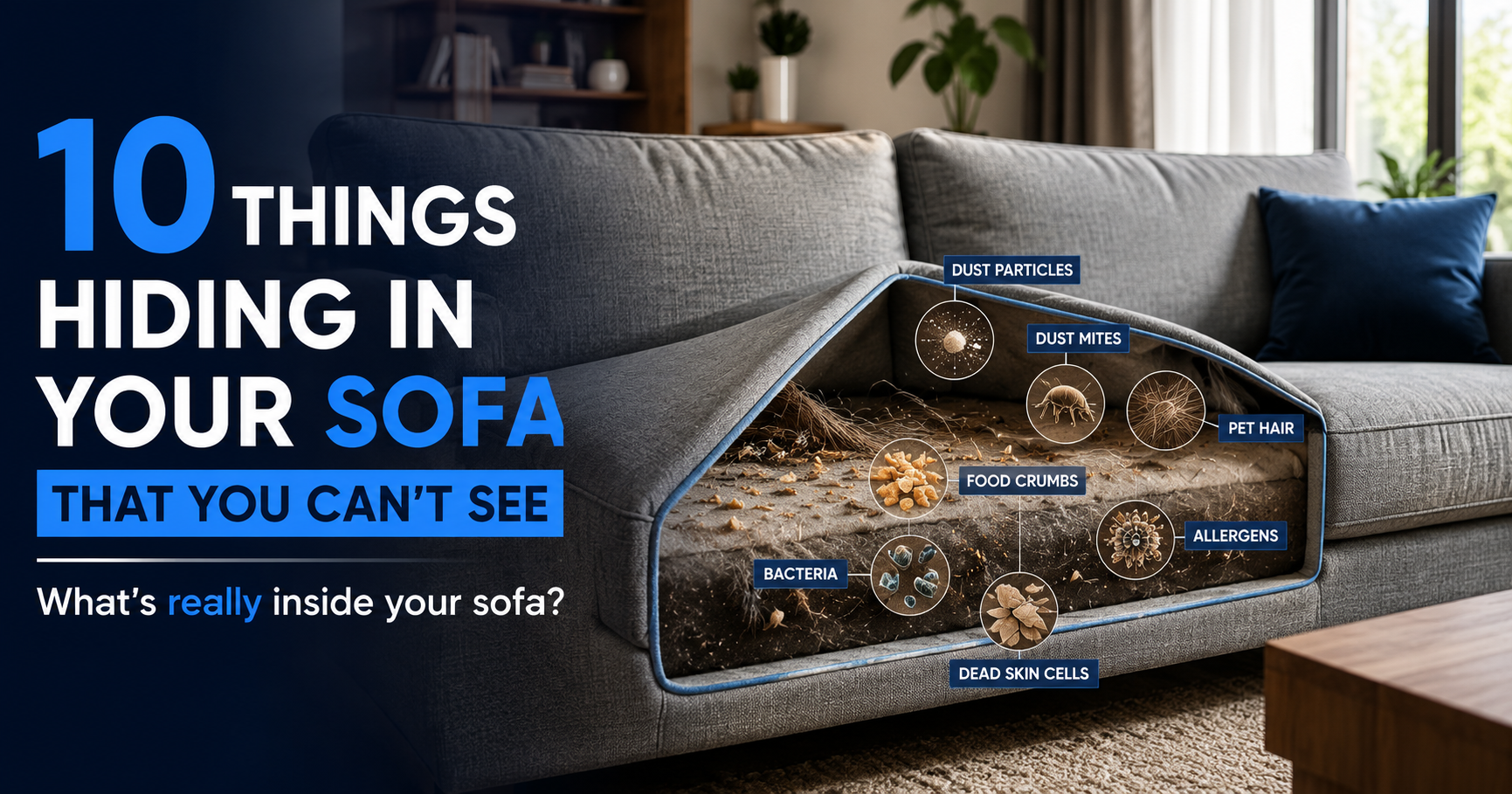
Your sofa probably looks fine. The cushions are fluffed, the fabric looks clean, and there are no obvious stains. But looks can be deceiving.
Sofas are used every single day. People sit, sleep, eat, and relax on them for years. Over time, all of that daily use leaves something behind, even if you can't see it. Deep inside the fabric, cushions, and seams, sofas quietly collect dust, skin cells, oils, and other things you'd probably rather not think about.
This is one of the main reasons why sofas get dirty so much faster than they appear to. The surface might look spotless, but the hidden layers tell a different story.
In this article, we'll walk through 10 things that are likely hiding in your sofa right now, how they get there, and why it's worth paying attention to sofa hygiene.
1. Dust and Dirt
Dust is everywhere in a home, and sofas act like magnets for it. Tiny dust particles float through the air and settle on every surface, including the fabric of your couch.
Dirt also gets tracked in from shoes, bags, and clothing. Every time someone sits down after being outside, a little bit of outdoor dirt comes along with them.
Over weeks and months, this builds up inside the fibres of the fabric, especially in the seams and under cushions where it's hardest to clean.
2. Dust Mites
Dust mites are microscopic creatures that live in soft furnishings like sofas, mattresses, and curtains. You can't see them with the naked eye, but they're almost certainly present in your sofa.
They feed on dead skin cells and thrive in warm, soft environments, which makes a well-used sofa an ideal home for them. The more people use a sofa, the more food source there is for these tiny organisms.
For people with allergies or asthma, dust mites can be a real problem, even if the sofa looks perfectly clean.
3. Dead Skin Cells
Humans shed thousands of skin cells every day. A lot of that shedding happens while sitting down, especially during long periods of relaxing or watching TV.
These dead skin cells fall into the fabric and sink down into the cushions over time. They're invisible to the eye, but they build up steadily with regular use.
This is also part of why dust mites are drawn to sofas in the first place, since skin cells are their main food source.
4. Food Crumbs
Snacking on the sofa is a common habit in most households. Whether it's popcorn during a movie or a quick sandwich at lunch, crumbs often fall and disappear into the cushions.
Small bits of food can slip between cushion gaps or get pressed into the fabric weave. Even careful vacuuming doesn't always reach every hidden corner.
Over time, these crumbs can attract pests or contribute to unwanted smells, especially if they aren't cleaned out regularly.
5. Pet Hair and Dander
If you have a cat or dog, your sofa is probably holding onto more pet hair than you realise. Pets naturally shed hair and skin flakes, known as dander, wherever they go.
Even if your pet isn't allowed on the furniture, hair can still travel through the air or attach to clothing and end up on the sofa anyway.
Pet dander is a common trigger for allergic reactions, so it's worth keeping in mind even for people who don't think they're sensitive to pets.
6. Bacteria and Germs
Sofas come into contact with hands, feet, food, and sometimes even shoes. Each of these can transfer bacteria and germs onto the fabric surface.
Because sofas aren't washed as often as clothing or bedding, germs can linger for longer periods. Warm, soft fabric also provides a comfortable environment for certain bacteria to survive.
This becomes especially important in homes with young children, elderly family members, or anyone with a weaker immune system.
7. Sweat and Body Oils
Sitting on a sofa for hours, especially during warmer months, naturally leads to sweat and body oils transferring onto the fabric. This happens gradually and is rarely noticeable in the moment.
Over time, these oils soak into the material and can leave behind faint discolouration or a slightly greasy feel, particularly on armrests and headrest areas where contact is highest.
This buildup can also affect how fresh the sofa smells, even after surface cleaning.
Also Read: How to Clean a Sofa at Home: A Complete Step-by-Step Guide
8. Allergens
Beyond dust mites and pet dander, sofas can also trap general allergens like pollen. Pollen can enter the home through open windows or attach to clothing and shoes from outside.
Once inside, these particles settle into soft furnishings, including sofas, and stay there until they're properly removed.
For people with seasonal allergies, this means a sofa could be quietly contributing to symptoms indoors, even when windows are closed.
9. Mould Spores
Mould spores are naturally present in the air, but they need moisture to grow. Spilled drinks, damp clothing, or high humidity in a room can create the right conditions for mould to develop inside a sofa.
This is more common in cushions that don't dry out fully after a spill, or in homes with poor ventilation.
Mould isn't always visible right away. Sometimes a musty smell is the first sign that something is growing inside the fabric or padding.
10. Unpleasant Odours
Many of the things mentioned above, including sweat, food residue, pet dander, and trapped moisture, combine over time to create odours that build up gradually.
Because the smell develops slowly, people living in the home often don't notice it. Visitors, however, may pick up on it right away.
This is one of the clearest signs that a sofa needs deeper attention, not just a quick surface wipe.
Why Regular Sofa Cleaning Is Important
Understanding why sofas get dirty so quickly makes it easier to see why regular cleaning matters. A few key benefits include:
- Better hygiene – Removing trapped dirt, bacteria, and germs creates a cleaner surface for everyday use.
- Improved indoor air quality – Sofas can hold onto dust and allergens that affect the air you breathe at home.
- Reduced allergens – Regular cleaning helps lower exposure to dust mites, pollen, and pet dander.
- Longer furniture life – Built-up dirt and oils can wear down fabric fibres faster, while clean upholstery tends to last longer.
- Better appearance – Clean sofas look fresher, feel softer, and simply make a room feel more inviting.
Routine maintenance, such as vacuuming and occasional deep cleaning, helps tackle the hidden dirt in sofas that everyday cleaning often misses.
Conclusion
A sofa might look spotless on the surface, but as we've seen, there's often a lot more going on underneath. From dust mites and dead skin cells to mould spores and trapped odours, sofas quietly collect things that aren't visible at first glance.
This is exactly why sofa hygiene deserves more attention than it usually gets. Regular cleaning, both at home and through occasional deep cleaning, helps keep these hidden contaminants under control and makes your living space healthier and more comfortable.
If your sofa hasn't had a thorough clean in a while, it might be time for more than just a quick vacuum. For professional deep sofa cleaning services in Delhi, visit DryClean Masters.